
Joint & Inflammation
Understanding Gout: Symptoms, Diagnosis, Treatments, and Next Steps
Sudden, severe joint attacks (often the big toe) — what triggers them and how we bring relief.
Explore related conditions
Gout rarely travels alone
Foot problems overlap. If your pain sounds more like one of these, jump straight to the page that fits — it’s all connected.
What is Gout?
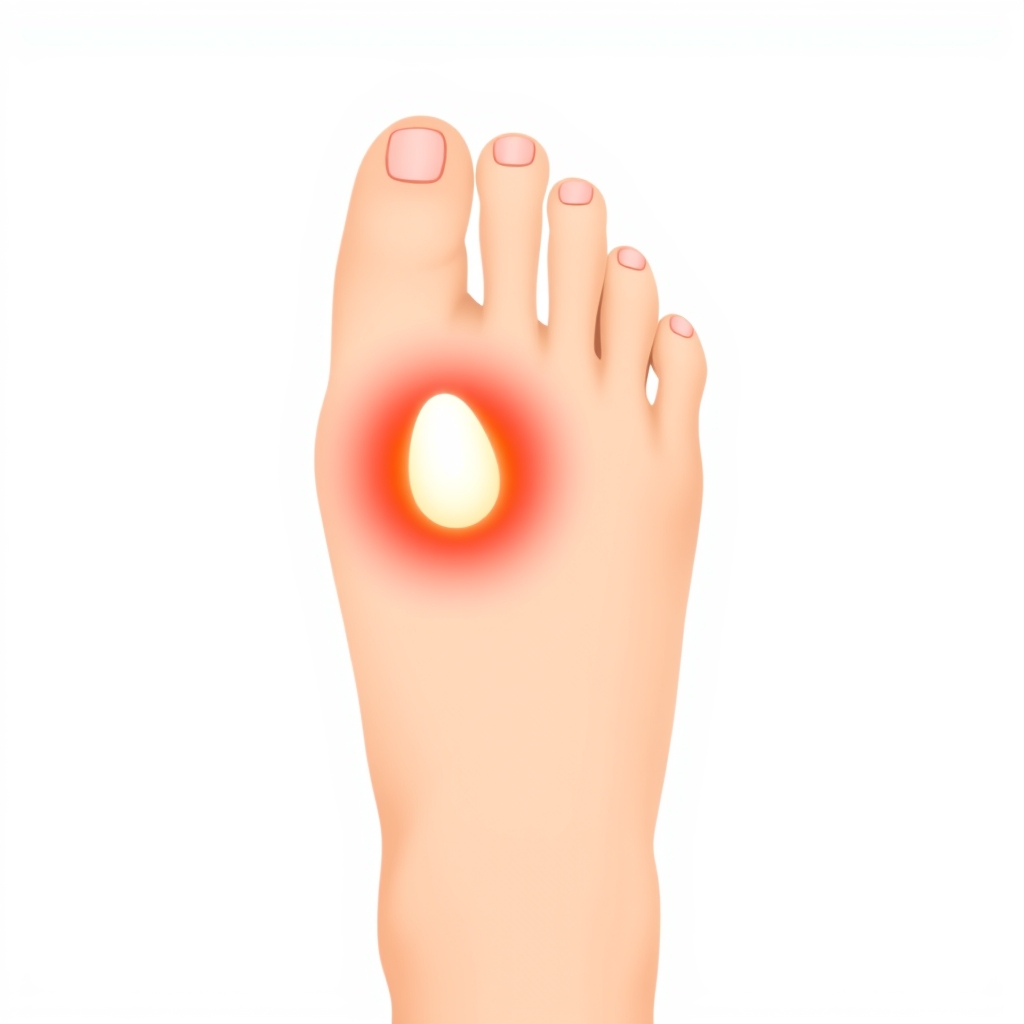
Gout is a type of arthritis that is characterized by sudden, severe attacks of pain, swelling, redness, and tenderness in the joints. It often affects the joint at the base of the big toe, but it can occur in any joint.
Symptoms of Gout
The symptoms of gout usually occur suddenly and often at night. They include:
- Intense joint pain: Gout usually affects the large joint of the big toe, but it can occur in any joint. The pain is likely to be most severe within the first four to 12 hours after it begins.
- Lingering discomfort: After the most severe pain subsides, some joint discomfort may last from a few days to a few weeks.
- Inflammation and redness: The affected joint or joints become swollen, tender, warm and red.
- Limited range of motion: As gout progresses, you may not be able to move your joints normally.
Diagnosing Gout
Diagnosis of gout involves a physical examination and tests. These may include:
- Blood test: Your doctor may recommend a blood test to measure the levels of uric acid and creatinine in your blood.
- Imaging tests: X-rays, ultrasound, and dual-energy computerized tomography (DECT) can be used to detect gout.
Possible Treatments for Gout
There are several treatment options for gout:
- Medications: Your doctor can prescribe medications to treat acute attacks and prevent future ones, as well as reduce your risk of complications from gout.
- Lifestyle changes: Dietary changes, such as limiting intake of meat and seafood and avoiding alcohol, can help reduce levels of uric acid.
- Injection Therapy: Corticosteroid injections into the affected joint can help reduce inflammation and pain.
- Blood Work: Regular blood tests can help monitor uric acid levels and the effectiveness of gout treatments.
Next Steps
If you’re experiencing symptoms of gout, it’s important to seek professional help. At Sharma Foot & Ankle Specialist, we’re dedicated to providing personalized care for your foot and ankle needs.
Don’t let foot discomfort hold you back. Reach out and make an appointment with us today. Your feet will thank you!
Ready to feel better?
Two board-certified surgeons · On-site X-ray · Same-week visits in Plano, TX
Frequently Asked Questions
What is gout?
Gout is a type of arthritis marked by sudden, severe attacks of pain, swelling, redness, and tenderness in the joints. It often affects the joint at the base of the big toe, but it can occur in any joint.
What causes gout?
Gout is linked to elevated levels of uric acid in the blood, which is why doctors often measure uric acid with a blood test. Certain dietary factors can raise uric acid, so limiting meat and seafood and avoiding alcohol may help reduce those levels.
What does gout feel like?
Gout usually comes on suddenly and often at night, with intense joint pain that is typically most severe within the first 4 to 12 hours. The affected joint becomes swollen, tender, warm, and red, and after the worst pain eases some discomfort can linger from a few days to a few weeks.
How is gout diagnosed?
Diagnosing gout typically involves a physical examination along with tests. These may include a blood test to measure uric acid and creatinine levels, and imaging such as X-rays, ultrasound, or dual-energy CT (DECT) to detect gout in the joint.
How is gout treated?
Treatment options for gout may include medications to manage acute attacks and help prevent future ones, corticosteroid injections into the affected joint to reduce inflammation and pain, and lifestyle changes such as dietary adjustments. Regular blood work can help monitor uric acid levels and how well treatment is working. Your provider can recommend the approach that fits your situation.
When should I see a podiatrist for gout?
If you are experiencing symptoms of gout, such as sudden, intense pain and swelling at the base of the big toe, it is a good idea to seek professional care for proper diagnosis and treatment. Sharma Foot & Ankle Specialist in Plano, TX provides personalized care for foot and ankle concerns, and you can book an appointment online.
This information is for educational purposes only and is not a substitute for professional medical advice. If you’re experiencing symptoms, please consult a qualified healthcare provider.